


The best waterproof chicken coop combines non-porous materials, a weatherproof roof, raised housing, dry bedding, and good drainage around the site. Plastic coops reduce water damage because rain does not soak into the walls and floors the way it does with timber. Covered ventilation keeps air moving while reducing direct rain entering the coop. Even a well-built waterproof coop needs regular checks around doors, roof joins, access panels, and run connections to stay in top condition through wet seasons.
Why it matters: A damp coop is more than an inconvenience. Wet bedding raises ammonia levels, increases the risk of respiratory illness, and creates ideal conditions for mites and mould. Getting the setup right from the start protects your chickens and saves you a lot of maintenance work.
What Makes a Chicken Coop Waterproof?
A truly waterproof coop does more than keep rain off the roof. It manages moisture at every point where water can enter, pool, or cause damage over time. Here's what to look for:
Materials that don't absorb water
Non-absorbent walls and floors are the foundation of a waterproof design. When rain hits a timber coop repeatedly, the wood absorbs moisture, softens, and eventually rots. Non-porous materials like high-density plastic don't hold water, which means the structure stays stable and waterproof even through prolonged wet weather.
A secure, well-fitted roof
Secure roof panels with overlapping joins limit leaks above the roosting and nesting areas. Any gap in the roof line, no matter how small, can allow water to drip onto bedding and nest boxes during heavy rain. Roof sections should sit flush with no warping or lifting at the edges.
A raised floor
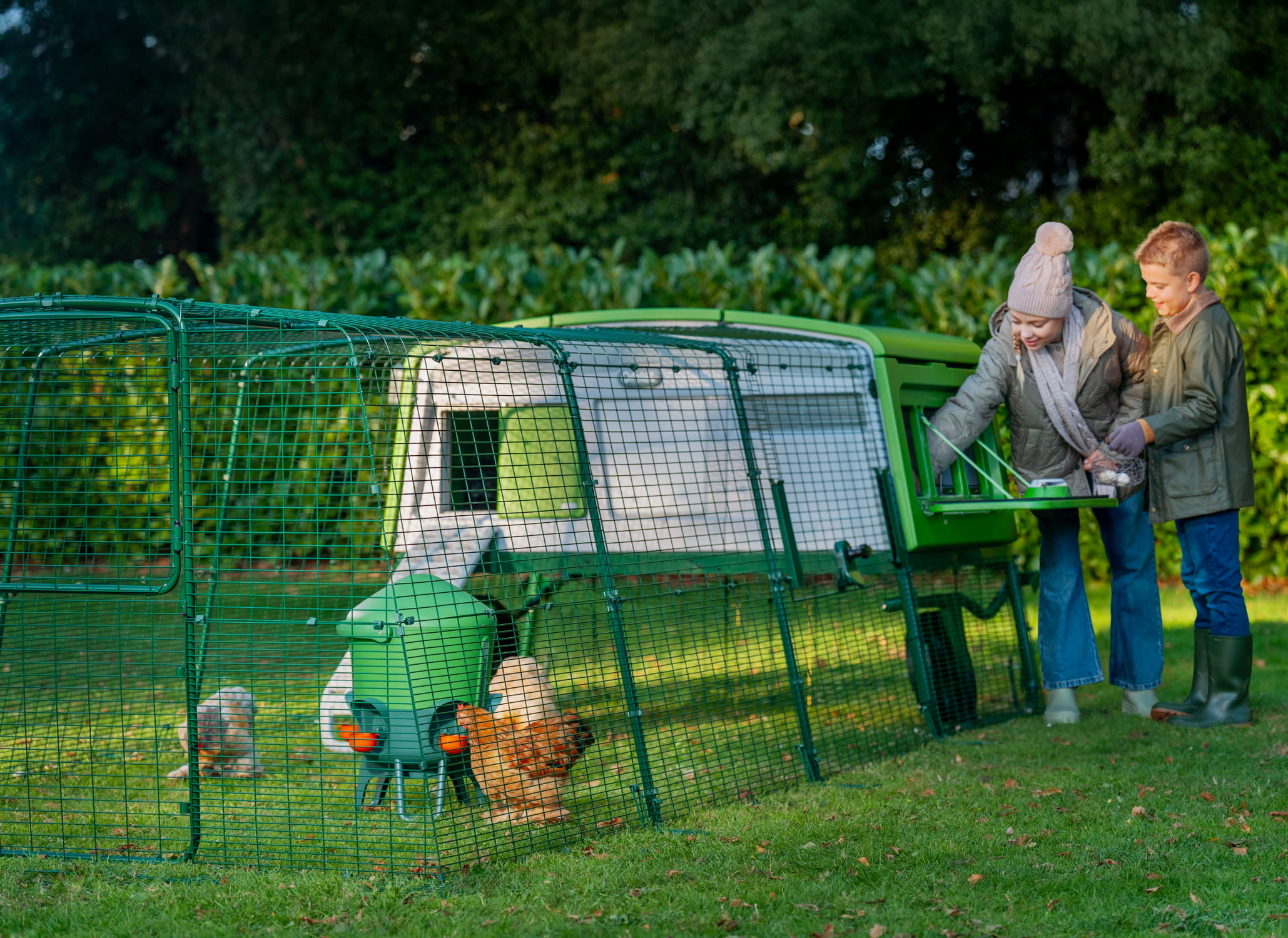
Raised floors keep the coop above standing water, mud, and saturated grass. During heavy rain, water pools quickly at ground level, and a coop sitting flat on the ground will draw moisture up through the floor. The Eglu Pro, Eglu Cube, and Eglu Go UP are all designed with the roosting section raised above damp ground that chickens access via an easy climb ladder.
Good drainage and ventilation
Good drainage directs rainwater away from the coop base and run entrance, preventing puddles from forming at the entry points your chickens use most. Covered ventilation provides fresh air without allowing direct rain inside. Ventilation is essential even in wet weather because a sealed, humid coop is actually more damaging to your flock than a well-ventilated one.
Tight-fitting doors and covered runs
Tight-fitting doors and access panels reduce wind-driven rain entering the sleeping area. Covered run sections protect food, water, and outdoor resting space, giving your chickens somewhere dry to be even when they don't want to go back inside. Dry bedding and a sheltered nest box help maintain a usable coop during long periods of wet weather.
Why Plastic Chicken Coops Are Better for Wet Weather
When it comes to wet weather, the material your coop is made from makes a bigger difference than almost any other factor. Plastic outperforms timber in every category that matters for rainy and muddy conditions.
Feature |
Plastic |
Timber |
|---|---|---|
Absorbs rainwater |
No |
Yes |
Swells or warps |
No |
Yes |
Rots over time |
No |
Yes |
Needs repainting, reroofing or repairs |
No |
Yes |
Mould risk |
Low |
Higher |
Wipes clean after mud |
Yes |
Difficult |
Dries quickly after rain |
Yes |
Slow |
Plastic does not absorb rainwater and therefore does not swell, soften, leak, or rot. That's a meaningful advantage in climates with heavy rainfall or gardens that stay wet for days at a time. Eglu chicken coops have smooth interiors that wipe clean after muddy weather, wet bedding, and storm debris, which is far harder to achieve with rough-sawn timber.
Smooth plastic dries more quickly than damp timber surfaces. After a rainstorm, a plastic coop is ready to clean and air out within hours. A timber coop can hold surface moisture for much longer, especially in shaded or north-facing positions.
Plastic also doesn't need repainting after repeated rain exposure. Timber coops typically require annual or biannual treatment to maintain their weather resistance, and any missed patches create entry points for moisture. Mould risk is lower when the coop material doesn't hold moisture, which benefits both the structure and your chickens' respiratory health.
Plastic housing suits humid regions, rainy climates, muddy gardens, and gardens with slower drainage. If your garden stays wet for extended periods, or you live somewhere that regularly gets heavy seasonal rain, a plastic coop is the more practical long-term choice.
How to Keep a Chicken Coop Dry in Wet Weather
Even the best waterproof coop benefits from good management during wet weather. These practical steps help keep the sleeping area dry, the run usable, and your chickens comfortable through rainy spells.
Site and positioning
Place the coop on high, well-draining ground rather than in a dip or low-lying corner of the garden
Keep the sleeping area raised above mud and standing water
Direct roof runoff and surface water away from the coop entrance so your chickens aren't wading through a puddle every time they go in and out
Maintenance checks
Check roofs, doors, panels, and joins for leaks at the start of each wet season and after any severe weather
Replace damp bedding quickly rather than waiting for it to dry out on its own; wet bedding is the main source of ammonia and mould inside the coop
Keep ventilation open but protected from direct rain, so fresh air can circulate without water blowing straight in
Run management
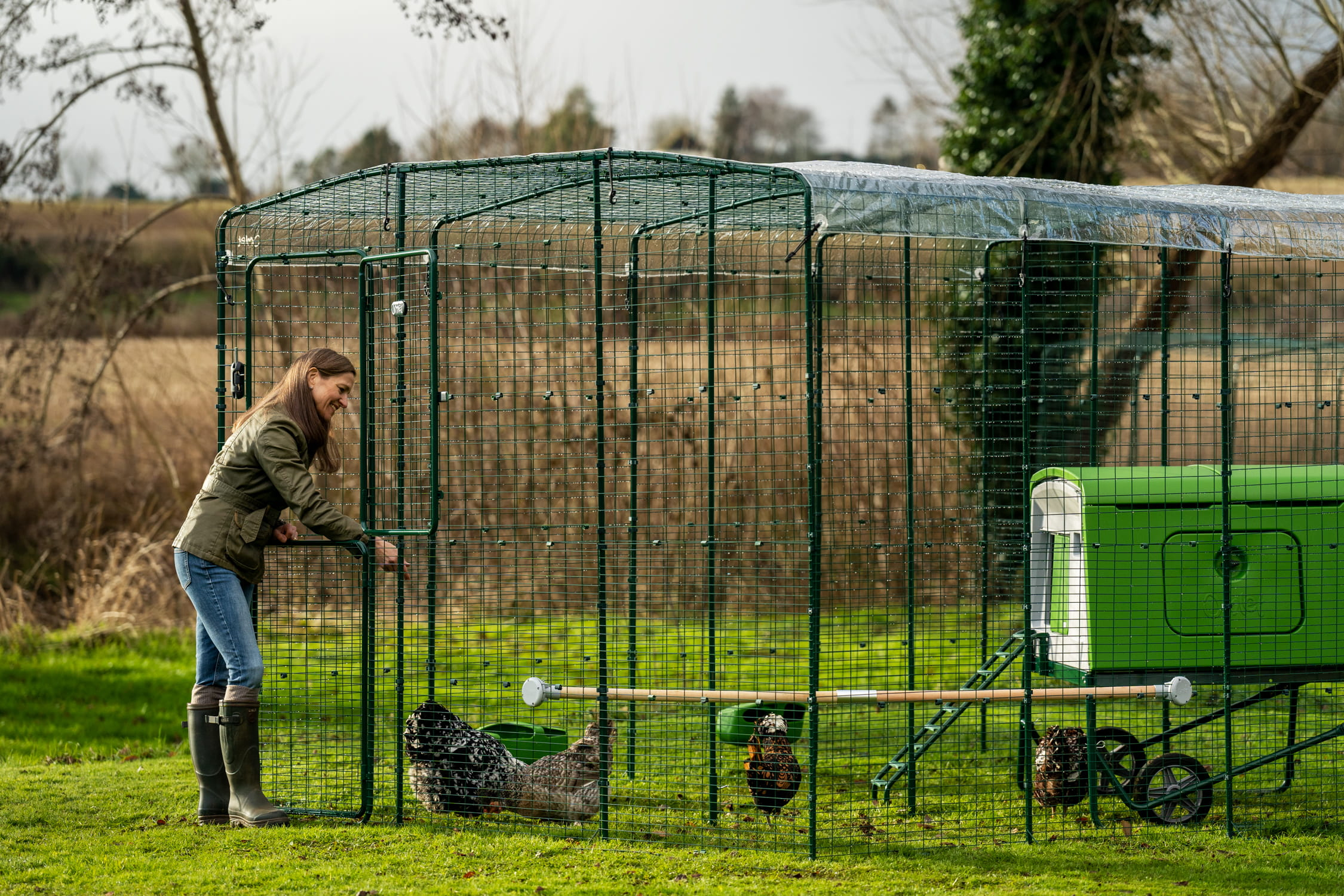
Cover the roof and part of the sides of the run to create a dry area for feeding and resting. Chickens don't always want to go back inside but they do want somewhere sheltered
Keep feeders and drinkers under shelter so rain and mud can't contaminate them
Add gravel, wood chips, or paving to improve drainage around the coop and reduce the amount of mud your chickens track back inside
Good to know: Wood chips are one of the most effective and low-cost solutions for muddy runs. They improve drainage, give chickens something to scratch through, and break down slowly into compost over time. Top them up regularly during wet months.
Best Coop Setup for a Wet Garden
If your garden is prone to water, heavy mud, or slow drainage, the setup around your coop matters as much as the coop itself. Here's how to build a setup that works through the wettest months.
Choose the right coop
Start with an elevated coop. The Eglu Pro, Eglu Cube, and Eglu Go UP all raise the sleeping area off the ground, keeping bedding and nest boxes clear of mud and pooling water. Their plastic construction means they won't absorb moisture from the surrounding environment, even if the ground underneath stays wet.
Choose the right location
Avoid low-lying areas, slopes that channel water toward the coop, and positions directly beneath roof runoff from your house or outbuildings
Build the coop and run on a firm, free-draining base wherever possible
Use gravel or permeable hardstanding beneath the coop to improve drainage and reduce mud at the entry points
Protect their run space
Add wood chips to muddy run areas to give chickens solid footing and improve drainage underfoot
Include a covered run section large enough for the whole flock, so every chicken has access to a dry space at the same time
Position food and water in the covered area to keep them clean and accessible in all weather
Use the right feeders and drinkers
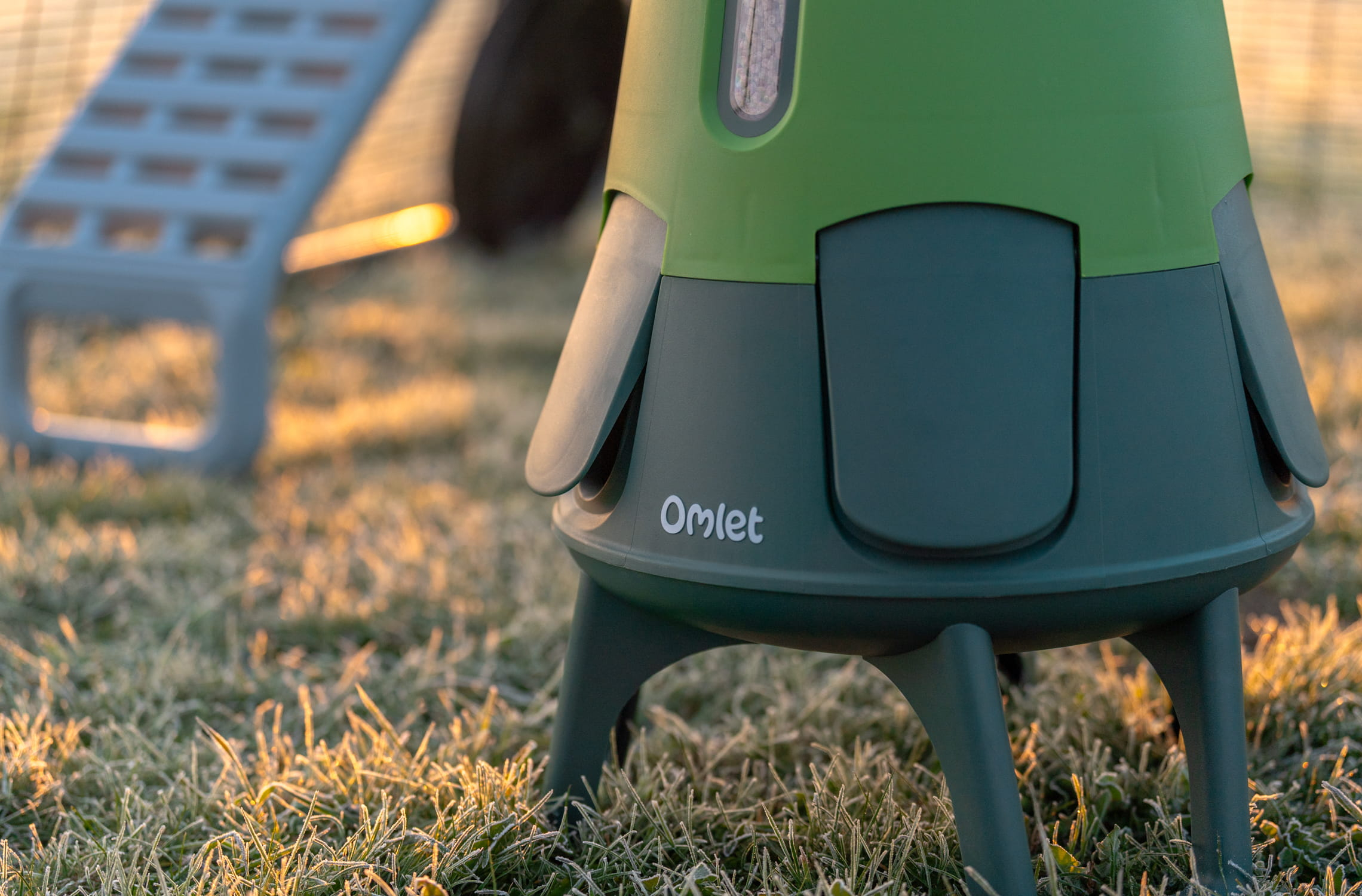
Enclosed chicken drinkers and feeders prevent mud and rainwater from getting into food and water supplies. Open drinkers and basic feeders left uncovered in a wet run can quickly become contaminated, which is both a waste and a health risk for your flock. Keeping supplies under cover and using enclosed designs makes a real difference during extended wet periods.
Summary
A waterproof chicken coop needs non-absorbent materials, a secure roof, raised housing, and protected ventilation
Plastic coops are well suited to wet weather because they don't absorb water, swell, rot, or hold dampness
Raising the sleeping area helps protect chickens, bedding, and nest boxes from mud and standing water
Good drainage, a firm base, and covered run sections keep the coop area cleaner during heavy rain
Keep food and water under cover, using enclosed drinkers and feeders to reduce contamination from mud and rain
Check roof panels, doors, joins, and access points regularly to prevent wind-driven rain from entering the coop


Comments
There are no comments just yet