 Free returns
 180-day guarantee
 10% off your first order


Bringing your chickens home is an exciting time for everyone involved. It is important to help your new flock settle in comfortably so they can thrive in their new environment. With a little patience and the right routine, you will soon be looking forward to finding your first eggs. We have gathered the best tips to help your chickens get settled as quickly as possible, including how to introduce them to other pets and ensure everyone gets along.
How Long to Quarantine New Chickens
Before introducing new birds to an existing flock, you should quarantine them for around four weeks. This helps prevent the spread of disease or infection from the new arrivals. Bird flu, or avian influenza, has an incubation period of about 21 days, so a 28-day quarantine is recommended. Quarantine is especially important for any chickens that are ill or show signs of illness, but some problems may not be immediately visible and can take time to appear.
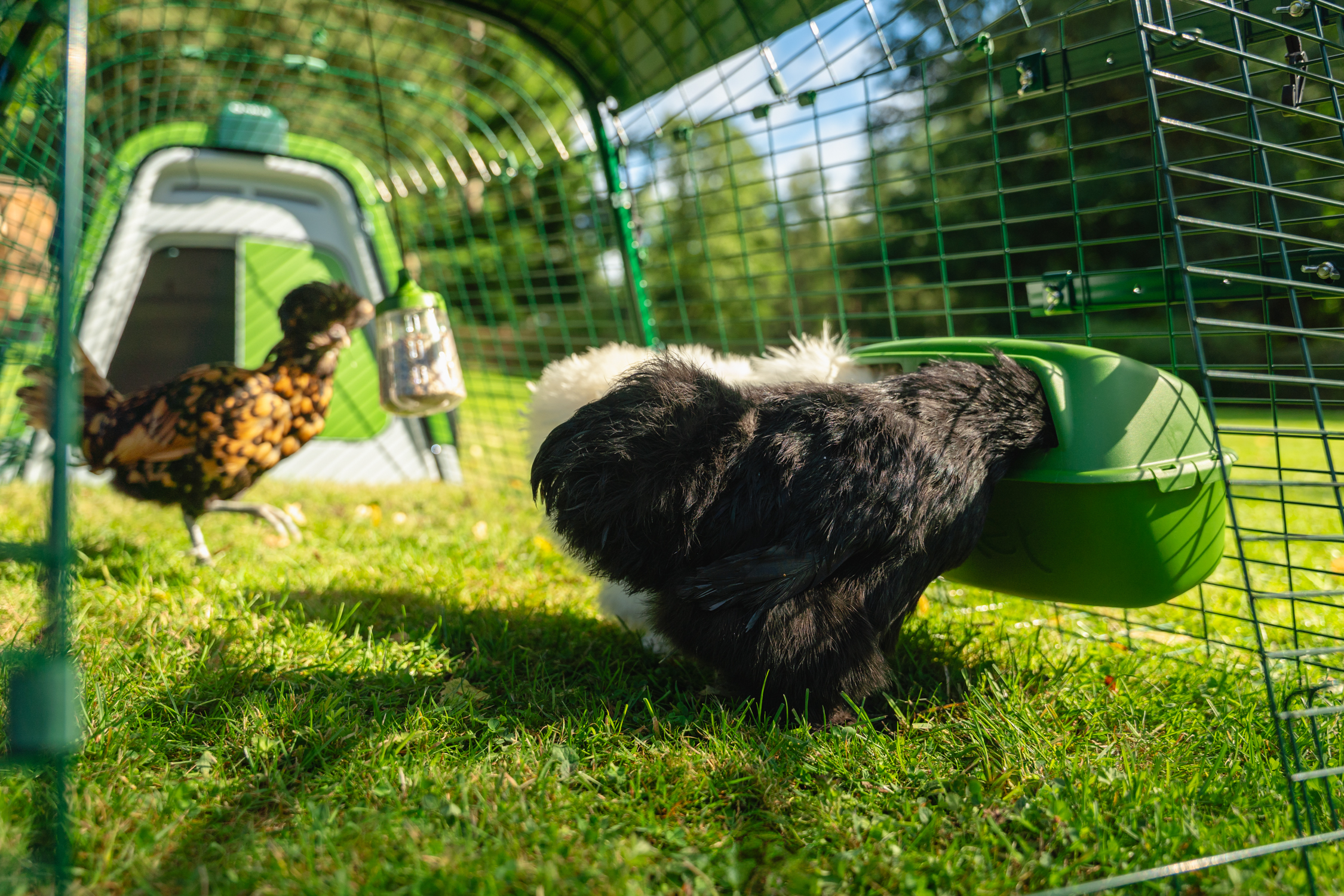
Quarantining new chickens significantly lowers the risk of spreading parasites and other health issues. Keep quarantined chickens in a separate coop, such as the Eglu Go or Eglu Go UP with a run, which are great options for housing three to four birds separately. Make sure the separate area has everything the birds need:
If you plan to merge flocks, ensure the quarantined chickens are always within sight and sound of the main flock. This helps them get used to each other and makes the eventual introduction smoother.
How to Introduce Chickens to a New Coop
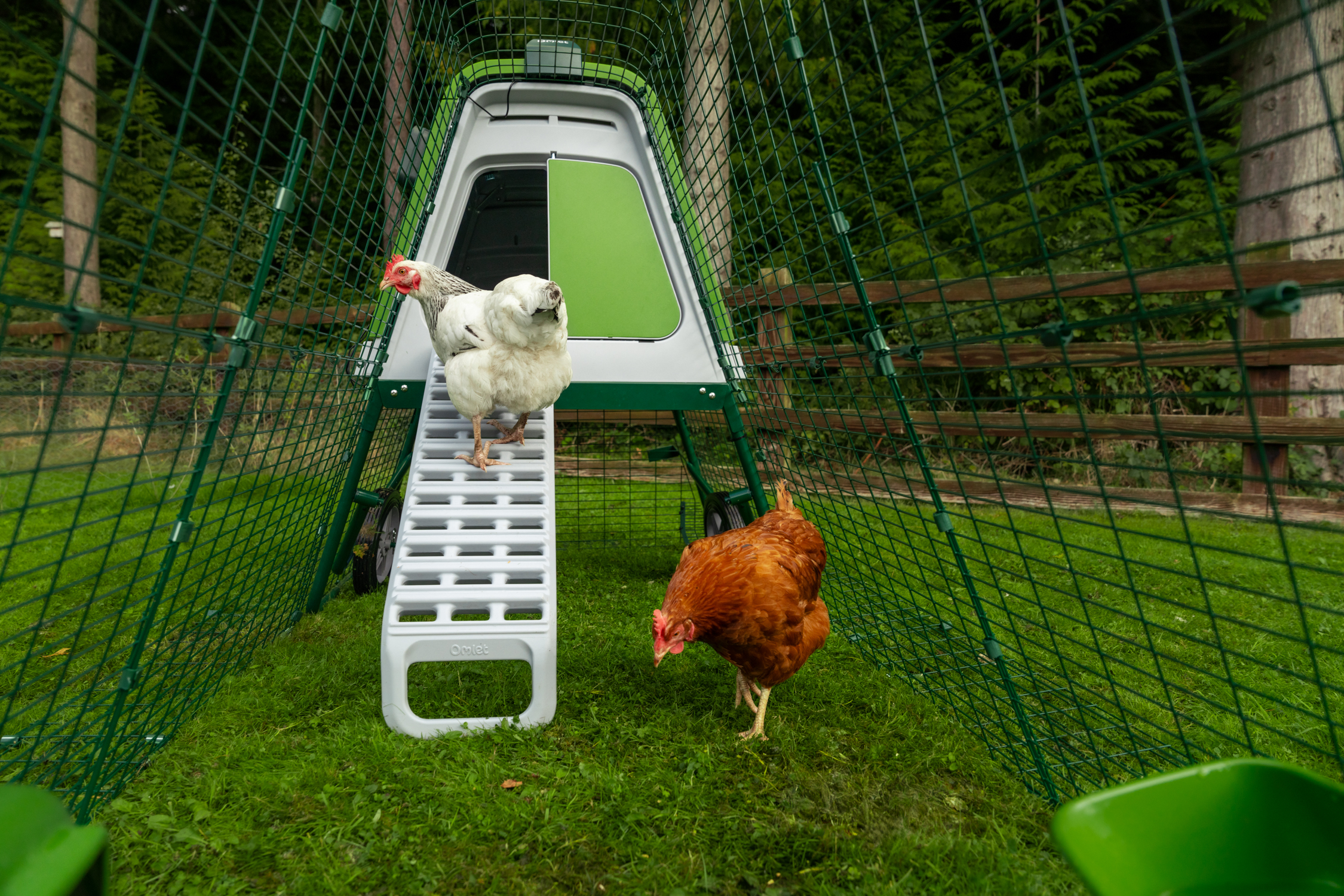
To help your chickens settle into their new coop, move them in just before bedtime. This helps them recognise the coop as their new home. If you plan to let them free range, keep them in the new coop and run for a few days first. This teaches them where they will be fed and kept safe.
Make sure your chickens have:
Enough food and water
Enrichment in their run
After the first night, open the coop door and encourage them to explore the run. You can sprinkle treats around the run to entice them out of the coop and guide them back inside at night.
When to Introduce New Chickens to the Flock
Introduce new chickens to your flock only after they have completed their quarantine period. During quarantine, or just after, keep the new and existing chickens in different runs but within sight of each other. If you have an Omlet Walk In Run, you can add partitions to keep the groups separate but close enough to become familiar.
To minimise bullying, it helps to introduce more new hens than existing ones, for example, four new hens to three existing hens. Introduce them in a common shared area, starting with short mingling sessions just before bedtime so the focus is on roosting. Monitor for any bullying and remove any hens who have been hurt.
Make sure you have enough space for all hens, as overcrowding can cause stress. A perch system like Omlet’s PoleTree gives chickens a place to get some space and helps the flock establish the pecking order, while enrichment toys like Peck Toys and Caddi Treat Holders keep the flock entertained and prevent boredom-based bullying.
How Long for New Chickens to Be Accepted
New chickens usually start to be accepted within a few days to a few weeks. However, establishing a full pecking order can take a few months or longer, especially in larger or older flocks that may be more territorial. The more space you provide, the easier the integration will be. Take things slow and steady to avoid causing distress.
Key Takeaways
Quarantine new chickens for four weeks to prevent disease and parasites
Move chickens into their new coop just before bedtime to help them settle
Keep new and existing chickens within sight of each other before full introduction
Introduce more new hens than existing ones to minimise bullying
Provide enough space, perches, and enrichment to reduce stress and aggression
Integration can take from a few days to a few months, depending on flock dynamics


Comments
Jen, 6 April 2022
Are hybrid hens better for beginners and how can you tell what breed they are from. Would this be by the different colours?
Sally, 29 April 2020
I have just put the new chickens into the coop but they don't want to come out. Unsurprising as it's raining. Should I put some food in the coop, or will that just encourage them to stay here and never venture out? I don't want them to be in lockdown too!
Tia, 10 April 2019
I’m getting chickens tomorrow so please reply ASAP , I beg . After the first day and night having them locked in the coop getting used to the house with an attached coop, I have a bigger coop (fenced) and a big garden , can I let them run free in the garden in the morning after or do I have to get them used to the bigger coop for a whole day or can I just let them out the morning after the first day Thanks xx